Strategy, creative thinking, industry perspective, and lessons from the work.
Work With Us ↗Not a problem at all. Twice a week is aggressive, but if we commit to it, you'll own your niche in search results by summer.
Here's what Tuesday + Friday could look like starting next week:
- Feb 18 (Tue): Beyond the Shoot
- Feb 21 (Fri): The Multiplier Effect
- Feb 25 (Tue): Nonprofit Storytelling
- Feb 28 (Fri): Real vs. Polished
- Mar 4 (Tue): The Pretty Video Trap (writing it now ⬇️)
- Mar 7 (Fri): The High-End Hook
- Mar 11 (Tue): Recruiting with Heart
- Mar 14 (Fri): Scale from Above (Drone)
I'll update the schedule in Wix after I finish this draft. Let's do this.
You spent $12,000 on a video.
It's beautiful. Cinematic. The kind of thing you're proud to show at board meetings. But three months later, you're still wondering why it didn't move the needle on donations, recruiting, or sales. It sits on your website. It got 400 views on YouTube. Your team shared it once on LinkedIn.
And your marketing still feels... disconnected.
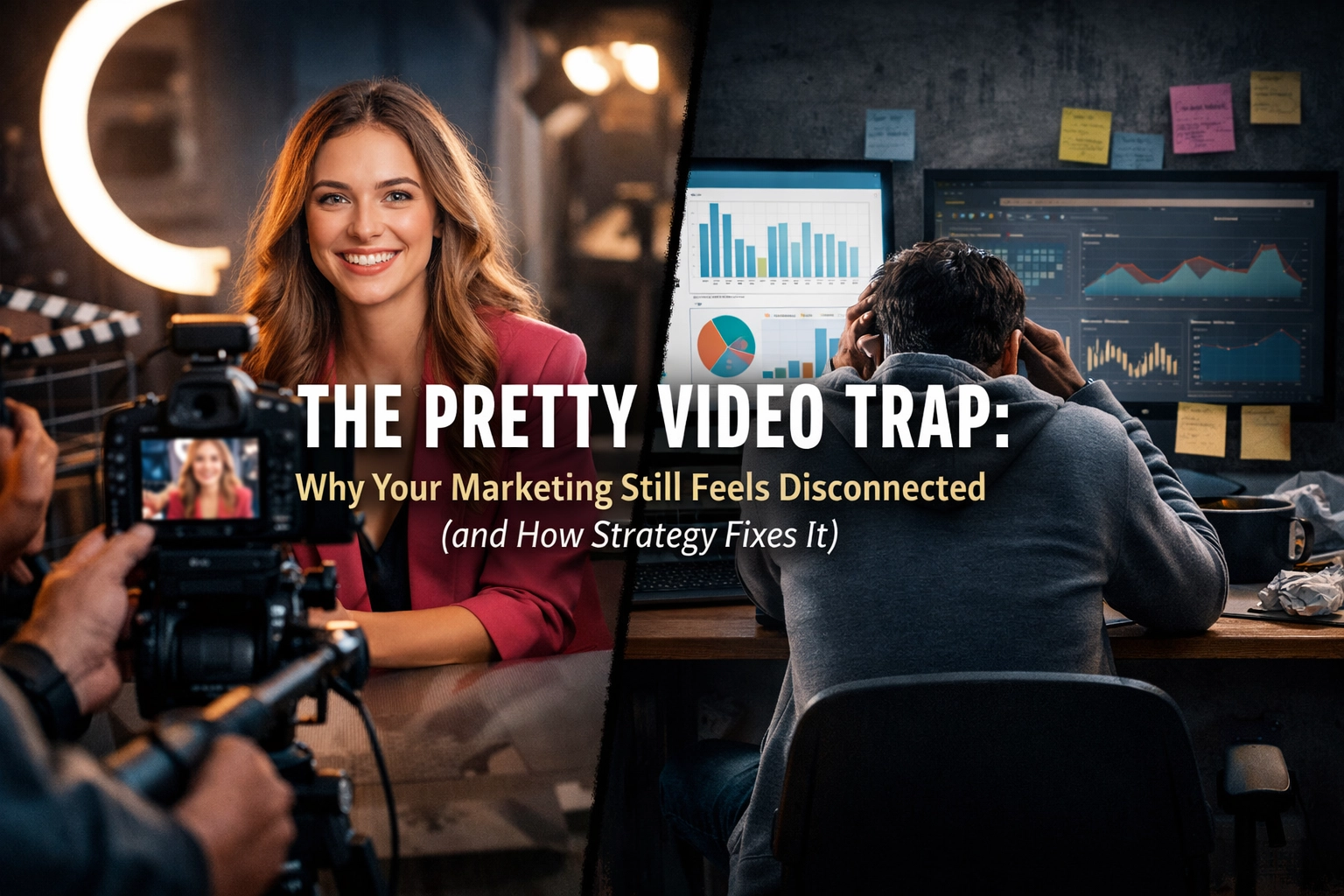
You're not alone. This is the Pretty Video Trap, and it's costing businesses and nonprofits thousands of dollars every year. Here's how strategy fixes it.
What the Pretty Video Trap Actually Is
The Pretty Video Trap happens when you invest in high-production video without a strategy to deploy it.
You hire a crew. They show up with cinema cameras, lights, and a shot list. You get a gorgeous 2-minute brand video. It looks like a Super Bowl commercial.
But no one told you:
- Where to post it (and how often)
- How to cut it down for Instagram, LinkedIn, and email
- What call-to-action to pair it with
- How it fits into your broader marketing plan
- Whether your audience even watches 2-minute videos
So it becomes a beautiful asset with no distribution engine. You spent on production. You didn't budget for strategy, deployment, or the 15+ cutdowns that make one shoot work across every channel.

Why Smart Organizations Still Fall Into It
It's tempting to think that if the video looks good enough, it will work.
But video marketing ROI doesn't come from production value alone. It comes from how the video integrates with your goals, your audience, and your existing marketing system.
Here's what usually happens:
1. You hire a videographer, not a marketing partner. They deliver a file. That's the end of the relationship. No one is thinking about your social media calendar, your email campaigns, or your website's SEO strategy.
2. You prioritize polish over connection. Research shows that 38% of consumers find "real and relatable" content more memorable than expensive, highly produced ads. Overly polished videos can actually undermine trust, your audience can tell when you're performing instead of helping.
3. You chase the wrong metrics. You measure views. But views don't pay the bills. What you actually need to track: click-through rates, email signups, donation conversions, and recruiting inquiries. Strategy connects the video to those outcomes.
The Real Cost of Disconnected Marketing
Let's talk numbers.
If you spend $10,000 on a video and it generates 2,000 views but zero measurable actions, your cost-per-result is infinite. You can't calculate ROI on something that didn't drive behavior.
Compare that to a $5,000/month marketing engine that includes:
- One hero video shoot per quarter
- 20+ social cutdowns from that footage
- Consistent posting (3x/week on your key platforms)
- Email campaigns tied to the video content
- Landing pages optimized for conversions
- Monthly performance tracking and iteration
That system doesn't just look good. It works. You're not paying for a video, you're paying for a strategy-first framework that turns footage into results.

How Strategy Fixes the Disconnect
Strategy is the difference between a pretty asset and a marketing engine. Here's what it looks like in practice:
1. Start with the Goal, Not the Shot List
Before you think about cameras, ask:
- What problem are we solving for our audience?
- What action do we want them to take after watching?
- Where does this video live in our buyer's journey or donor funnel?
If you're a nonprofit, the goal might be: Increase monthly recurring donations by 15% in Q2. That goal shapes everything, your story angle, your call-to-action, your email sequence, and your ad targeting.
If you're a business recruiting talent, the goal might be: Drive 50 qualified applicants to our open roles. That means your video needs to showcase culture, not just capabilities. And it needs to live on your careers page, your LinkedIn, and in targeted recruiting ads.
Strategy first. Shots second.
2. Plan for Multi-Channel Deployment
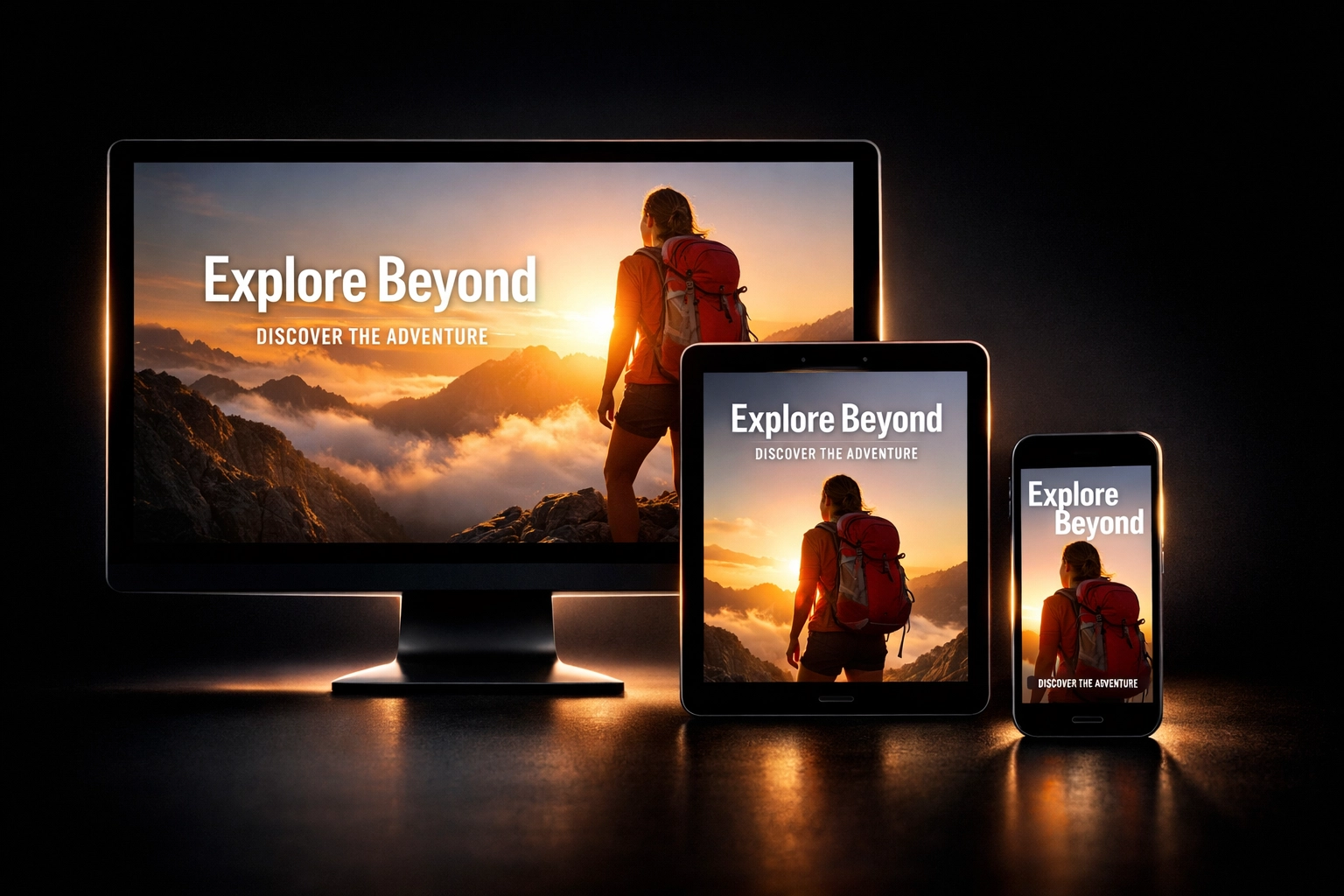
One video should become 15+ assets. Here's how we break it down:
- Hero video (2 min): Lives on your website and YouTube
- 60-second version: For LinkedIn organic posts
- 30-second version: For Instagram Reels and Facebook
- 15-second teaser: For Stories and paid ads
- 10 pull quotes: Designed as Instagram carousels or quote cards
- 3 blog posts: Built around the video's themes (hello, SEO)
- Email campaign: 4-part sequence linking back to the video and your CTA
You shot the footage once. But strategy turns it into a 90-day content calendar. That's the multiplier effect, and it's how you actually get ROI on video production.

3. Balance Polish with Authenticity
You don't need a $15,000 cinema setup to tell a great story.
What you do need:
- Clear audio (because bad sound kills even the best visuals)
- Thoughtful framing (because composition guides the eye)
- Authentic delivery (because your audience can smell a script from a mile away)
Some of the highest-performing video content we've seen is semi-polished, it's well-lit and well-composed, but it feels human. It's a founder talking directly to the camera about why they started the business. It's a program director walking through the facility, unscripted, showing what happens behind the scenes.
People don't trust perfection anymore. They trust intention and consistency.
4. Tie Every Video to a Conversion Point
This is where most video projects fall apart. You make something beautiful, but you don't connect it to a specific next step.
Every video should answer: What do you want the viewer to do?
- Visit a landing page
- Schedule a consultation
- Download a resource
- Donate
- Apply for a job
- Book a demo
Then you build the path. That means:
- A clickable CTA in the video's last 5 seconds
- A description with a direct link (not "link in bio")
- A corresponding landing page optimized for that action
- Retargeting ads for people who watched but didn't convert
- Follow-up emails for people who clicked but didn't complete
This is what separates a one-off project from a marketing engine. Strategy doesn't stop at "post the video." It follows the viewer all the way to conversion.

What a Strategy-First Partnership Actually Looks Like
Most businesses and nonprofits don't need more one-off video projects. They need a partner who thinks about the whole system.
Here's what that looks like with South Town Productions:
Month 1: We map your goals, audit your current marketing, and identify the 3 stories you need to tell this quarter. We shoot your hero footage: interviews, b-roll, culture moments, donor impact: and start building your content library.
Month 2: We're deploying. Your hero video goes live on your site. We're posting 3x/week on social with cutdowns, quote cards, and behind-the-scenes moments. We're tracking performance and adjusting what's working.
Month 3: We're optimizing. The data tells us which stories resonate, which CTAs drive action, and where to double down. We're already planning your next shoot based on results, not guesses.
This is video marketing strategy: not videography. You're not paying for footage. You're paying for consistent storytelling that's aligned with your business goals, deployed across every channel, and optimized for ROI.
And it costs less than you think. Most of our long-term partners spend $5,000/month and see better results than they got from a single $15,000 one-off project: because the strategy is built in from day one.
Final Thoughts
The Pretty Video Trap isn't about bad videographers or wasted budgets. It's about missing the strategy that connects production to performance.
If your marketing feels disconnected, it's because you're treating video as a project instead of a system. You're buying assets instead of building an engine.
Let's fix that. At South Town Productions, we don't just shoot video: we build strategy-first marketing systems that turn footage into results. If you're ready to stop chasing one-off projects and start building a content engine that actually works, let's talk.
Your story deserves more than a pretty video. It deserves a strategy that makes it work.