Strategy, creative thinking, industry perspective, and lessons from the work.
Work With Us ↗You're paying for a video shoot. Again.
Because the last one only gave you one video. And now you need more content. So you're booking another crew, finding another date, and writing another check.
Most organizations treat video like a one-time transaction: one shoot, one video, one use. But that approach burns budget and keeps you stuck in a cycle of constantly producing just to keep up.
Here's the better way: shoot once, plan strategically, and extract 12 months of content from a single production day.
This isn't about cutting corners or stretching thin footage until it breaks. It's about planning for distribution before you ever hit record: so every angle, every take, and every story beat is designed to live across multiple platforms in multiple formats.
Here's the framework that makes it work.
The Real Cost of "One-and-Done" Video
When you produce a single video for a single purpose, you're not just leaving content on the table: you're leaving ROI on the table.
That three-minute brand story you posted on your website? It could've been:
- Six 15-second Instagram Reels highlighting different value propositions
- Three LinkedIn posts with pull-quote graphics and captions
- A YouTube Short introducing your services
- Four email newsletter clips with different CTAs
- Behind-the-scenes stories that humanize your team
Instead, it lives in one place. Gets watched once (maybe). And then you start planning the next shoot.
The problem isn't the video. It's the lack of a content architecture built into the production plan.
The Framework: Strategy-First Content Multiplication
The proven way to turn one shoot into 12 months of content comes down to four phases. And it starts before the camera ever rolls.
Phase 1: Audit Your Content Pillars and Build Quarterly Themes
Before you book a shoot, ask yourself:
- What three to five topics establish your authority?
- What does your audience actually need to hear about each quarter?
- Which platforms are your decision-makers spending time on?
You're not just making a video. You're designing a year-long narrative.
Map your 12 months into quarterly themes. Maybe Q1 is education and thought leadership. Q2 is product or service deep-dives. Q3 is social proof and testimonials. Q4 is impact stories and year-in-review.
Every shoot you plan should feed into at least one of these themes: and ideally, multiple formats within that theme.
Phase 2: Shoot with Repurposing in Mind
This is where most organizations miss the opportunity.
If you're only planning for a single deliverable, you're only capturing what you need for that one video. But if you plan for multiple content tiers from the same shoot, you capture:
- Wide shots and tight shots
- Horizontal framing and vertical framing (9:16 for Reels, TikTok, Stories)
- Full interviews and soundbite-friendly answers
- B-roll that works as standalone clips, not just background footage
- Multiple takes with different energy levels (some polished, some candid)
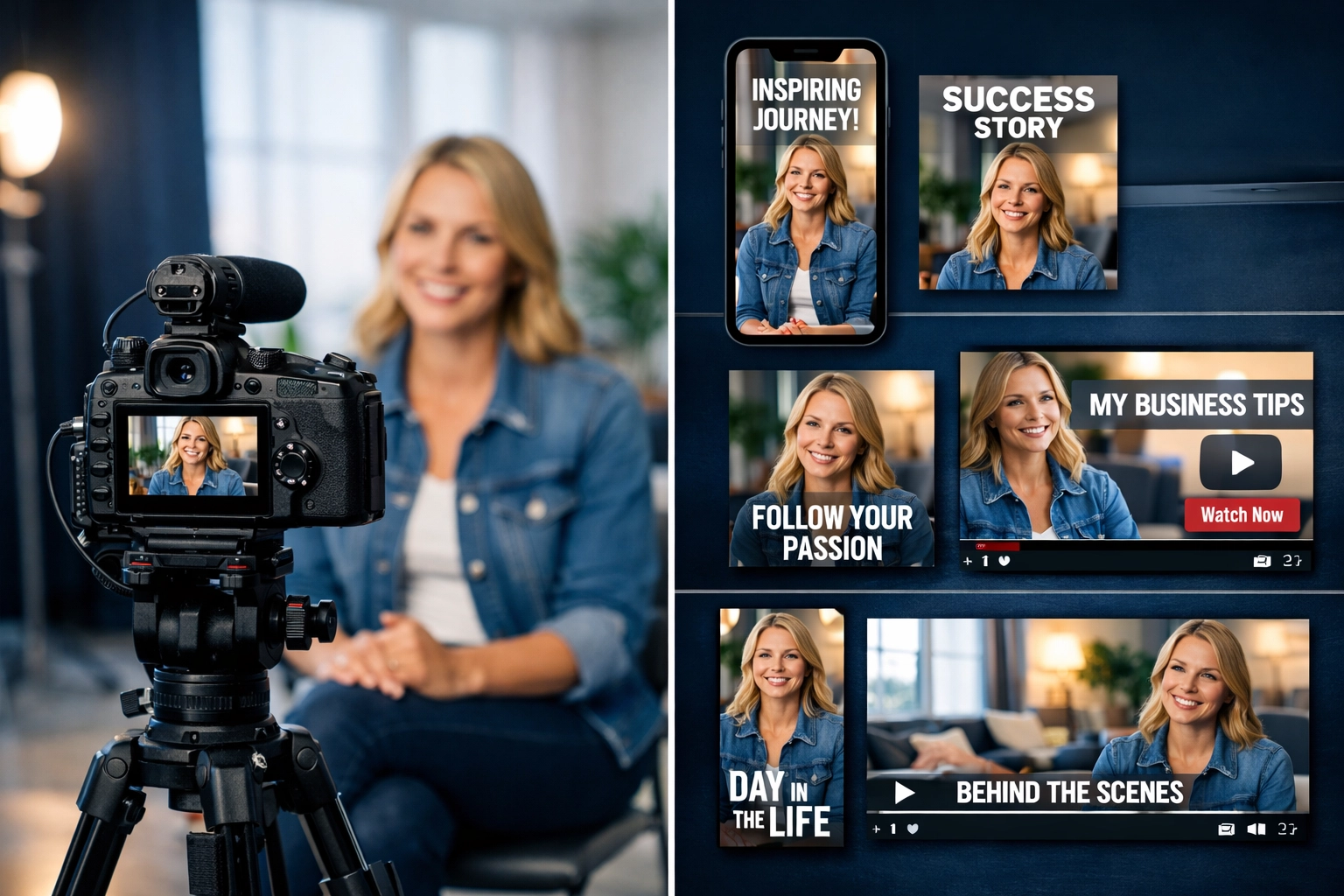
One 30-minute interview can become:
- A long-form video for your website or YouTube
- 10–15 short-form clips for social platforms
- Pull-quote graphics with key insights
- Audio snippets for LinkedIn carousels or email
- Thumbnail images and promotional assets
The strategy determines what you shoot. The shoot determines how much content you walk away with.
Phase 3: Build a Content Architecture (Not Just a Video)
Once you've captured strategic footage, the next step is organizing it into a content system: not just individual posts.
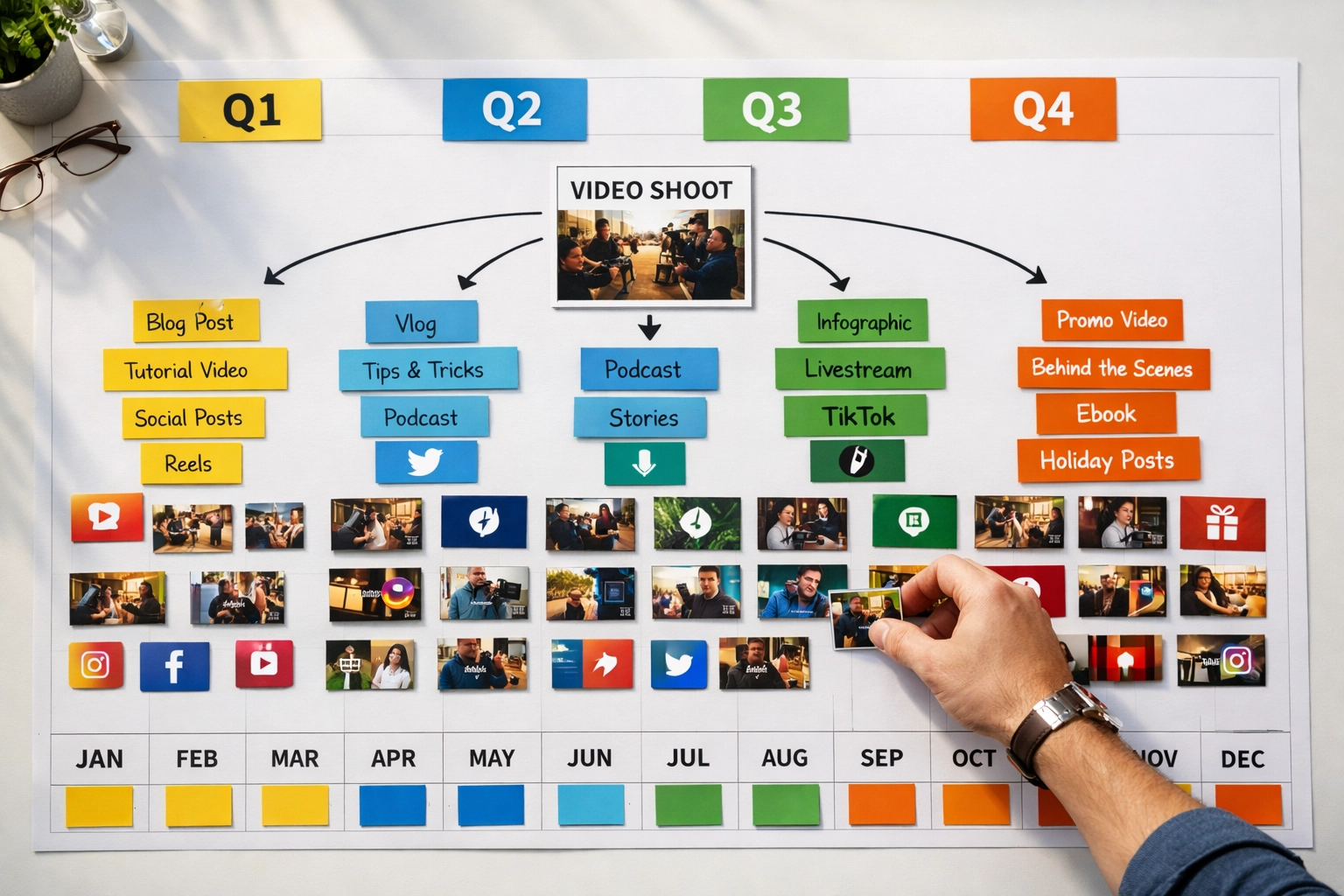
This is where quarterly themes come back into play. Break your year into content blocks:
Quarter 1 (Education & Thought Leadership)
- Week 1: Introduction to the topic (long-form explainer)
- Week 2–4: Short-form tips extracted from the long-form piece
- Month 2: Deeper dive with case study or example
- Month 3: "Myths vs. Reality" series using interview soundbites
Quarter 2 (Service Deep-Dives)
- Week 1: Overview of what you do
- Week 2–4: Individual service breakdowns
- Month 2: Behind-the-scenes of how you deliver
- Month 3: Client testimonial tied to that service
You're not guessing what to post each week. You're executing a plan that was designed during pre-production.
Phase 4: Distribute with Platform-Specific Formatting
Here's the part most businesses get wrong: they take one video and upload it everywhere in the same format.
Instagram wants vertical 9:16. LinkedIn prefers square 1:1 or horizontal 16:9 with captions. YouTube rewards longer watch time. Your website needs embedded video optimized for page load speed.
The same story needs different packaging for different platforms. That's not extra work: that's smart distribution.
From one shoot, you should be creating:
- A hero video (long-form, 2–5 minutes) for your website or YouTube
- 10–20 short-form vertical clips (15–60 seconds) for Instagram, TikTok, LinkedIn
- Quote cards or static graphics with video stills
- GIFs or cinemagraphs for email headers
- Audio snippets or voiceover-only versions for accessibility
And because you shot with this in mind, every piece of content feels intentional: not like a stretched-thin afterthought.
What This Actually Looks Like in Practice
Let's say you're a nonprofit running a workforce development program. You book a single shoot day with three participants, two staff members, and some B-roll of your facility.
Here's what you walk away with:
From Participant Interviews:
- One 3-minute "impact story" video for your website and fundraising campaigns
- 12 short-form testimonial clips (each participant gives 4 usable soundbites)
- Quote graphics with participant photos for social media
- Audio-only clips for podcast features or email storytelling
From Staff Interviews:
- One 2-minute explainer video: "How Our Program Works"
- 8 short-form "day in the life" or FAQ clips
- Behind-the-scenes Instagram Stories or Reels showing your team in action
From B-Roll:
- Facility tour snippets for Instagram and LinkedIn
- Standalone visual clips with text overlays (no interview needed)
- Thumbnail images and website hero images
That's one shoot day. And it gives you 30+ pieces of content you can distribute strategically over the next 12 months.
You're not scrambling for content every week. You're executing a strategy.
Why Most Organizations Don't Do This
It's not because they don't want to maximize ROI. It's because they don't plan for it upfront.
They hire a production company to "make a video," get one deliverable, and then realize later they need more content. By then, the crew is gone, the talent is unavailable, and the moment has passed.
The fix is simple: strategy before production.
When you work with a team that understands content architecture, multi-platform distribution, and quarterly planning, you're not just getting a video: you're getting a content system that powers your marketing for months.

Final Thoughts
The proven framework for turning one shoot into 12 months of content isn't complicated. It's strategic.
Audit your content pillars. Plan quarterly themes. Shoot with repurposing in mind. Build a content architecture. Distribute with platform-specific formatting.
Done right, one production day can fuel an entire year of consistent, high-quality content that positions your brand as authoritative, accessible, and always visible.
If you're ready to stop paying for the same shoot over and over: and start building a content system that actually works: let's talk about what a strategy-first video plan looks like for your organization.
We'll help you plan, shoot, and distribute smarter: so every dollar you invest works harder for you.