Strategy, creative thinking, industry perspective, and lessons from the work.
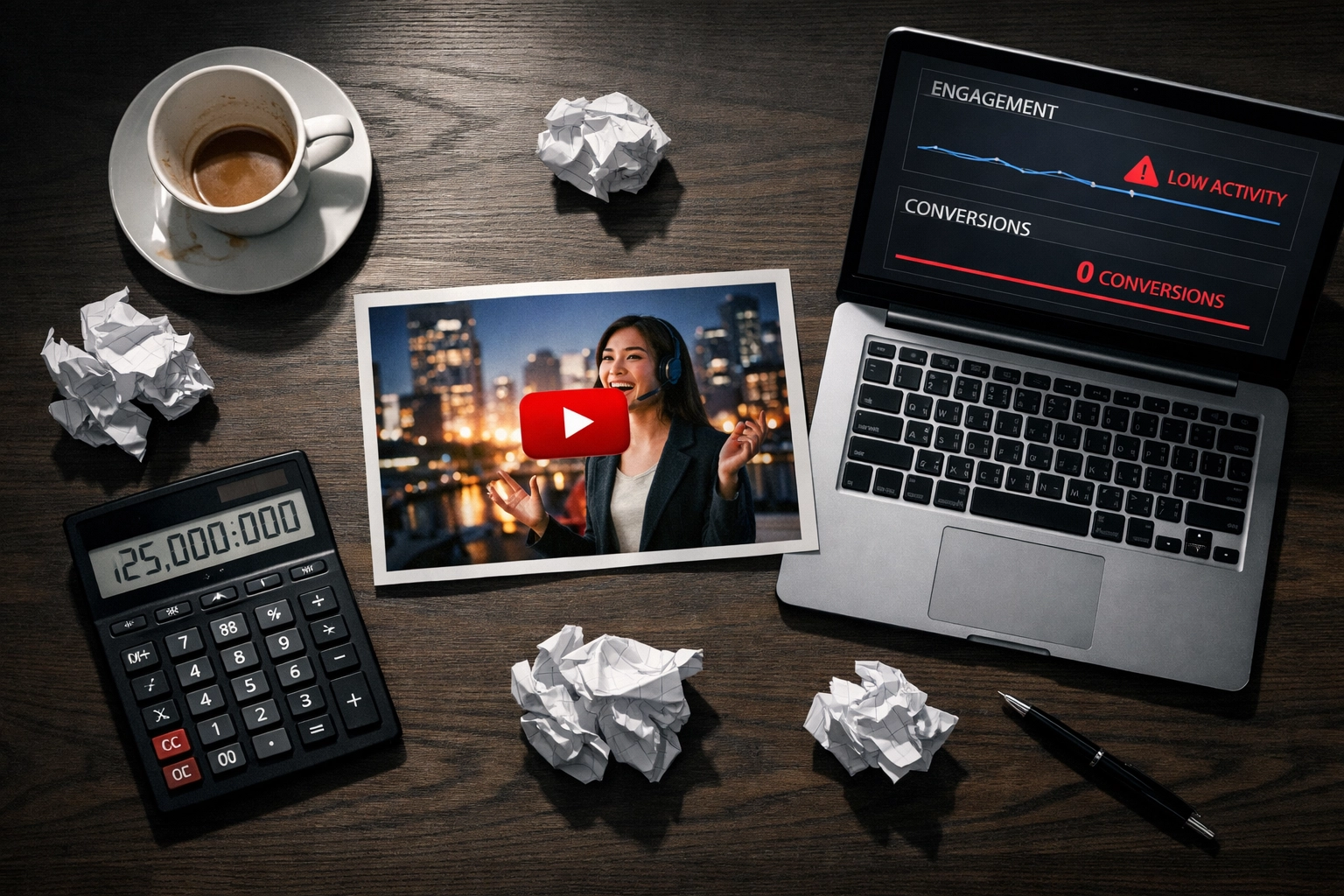
Work With Us ↗You commissioned a video. It looks great. The lighting is perfect, the testimonials are heartfelt, the color grading is cinematic. You posted it on your website, shared it on LinkedIn, and sent it in a few emails.
And then… nothing.
No spike in leads. No uptick in conversions. No measurable change in how your audience engages with your brand. You spent thousands of dollars on something beautiful that didn't move the needle. What happened?
You paid for production. You didn't invest in strategy.
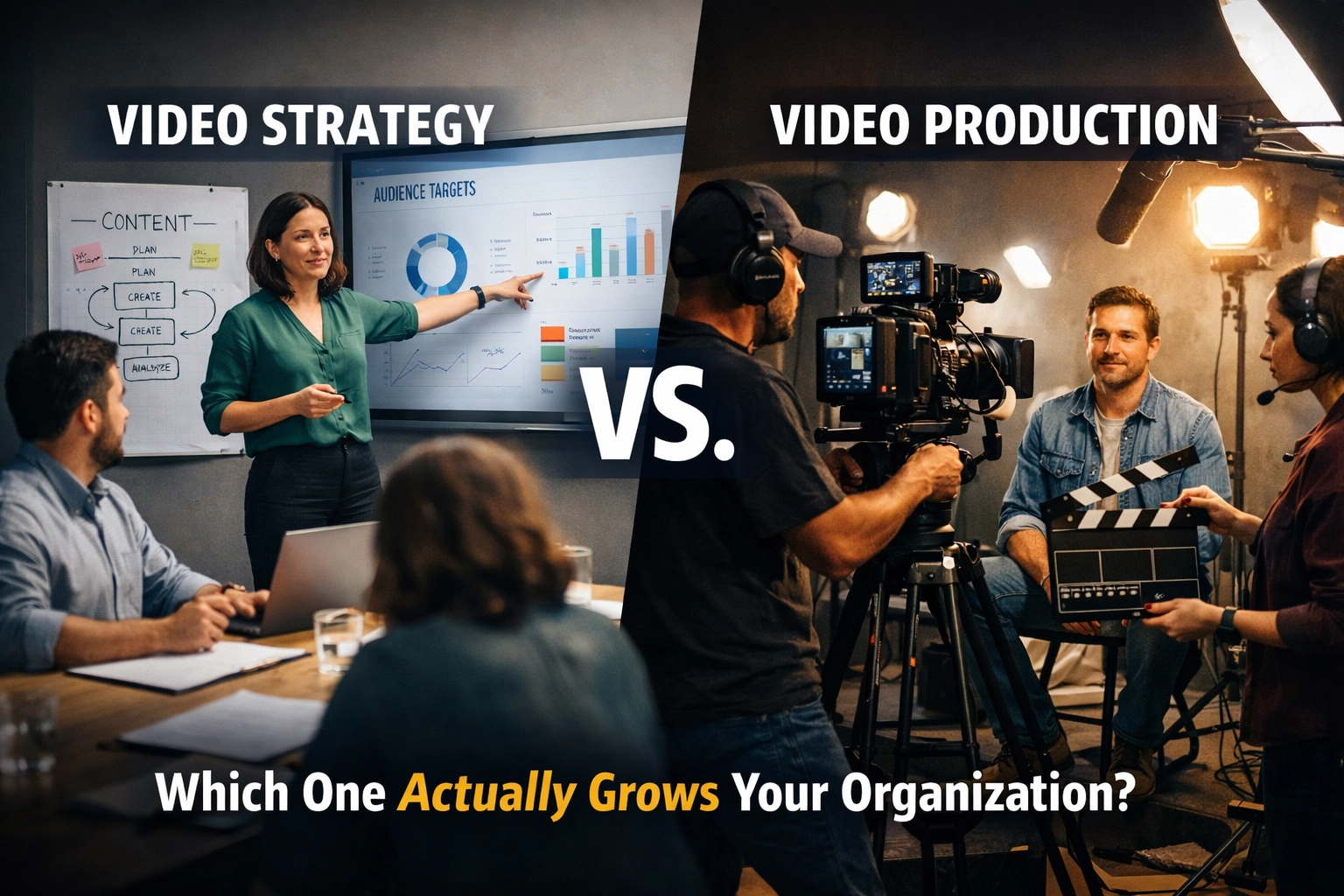
Here's the truth: video production creates content. Video strategy creates results. And if you're making decisions about video for your organization without understanding that distinction, you're gambling with your budget, not investing it.
Let's break down why.
What Video Production Actually Does
Video production is the craft of making a video. It's cameras, lights, editing software, sound design, and talent. It's the technical execution that turns a concept into a finished piece of content. And yes, production quality matters: bad audio, shaky footage, or clumsy editing can sink even the best message.
But production is only half the equation. It answers the question: Can we make this look and sound good?
It doesn't answer:
- Who is this for?
- What do we want them to do after they watch it?
- Where will they see it?
- How does this fit into the larger goals of our organization?
- What happens if they don't convert on the first watch?
Production creates an asset. Strategy creates a system.

Why "Just Making a Video" Is a Gamble
Most organizations approach video like this: They know they should be doing video. They've heard it converts better. They've seen competitors doing it. So they hire a production company, shoot something that looks professional, and hope it works.
That's a gamble.
You're betting that the video will somehow find the right audience, deliver the right message, and inspire the right action: without a clear plan for any of those things. You're hoping that good visuals will do the strategic heavy lifting.
They won't.
Here's what happens without strategy:
- You create the wrong video for the wrong audience. A high-energy commercial doesn't work on a long-form landing page. A heartfelt testimonial doesn't perform well as a cold LinkedIn ad. Without strategy, you're guessing at what fits where.
- You don't distribute it effectively. You post it once and move on. You don't repurpose it for different platforms. You don't test different cuts, captions, or CTAs. The video sits on your site and collects dust.
- You can't measure what matters. You have no KPIs, no benchmarks, no way to know if the video is actually contributing to your goals. You might see views, but views don't pay the bills.
- You don't build on it. One video becomes a one-off project instead of the foundation of a scalable content system. You're back at square one in three months, asking yourself, "Should we make another video?"
This is the expensive cycle that most businesses get stuck in. They keep commissioning videos, keep spending money, and keep wondering why it's not working.
The problem isn't the production. It's the absence of strategy.
What Video Strategy Actually Does (And Why It's an Investment)
Video strategy is the deliberate, data-informed plan that answers all the questions production can't. It's the framework that turns one video: or a suite of videos: into a growth engine for your organization.
Strategy asks:
- Who are we trying to reach, and what do they care about? Not "everyone." Not "people who might need our services." A specific decision-maker with a specific problem at a specific stage of awareness.
- What action do we want them to take? Book a call? Download a resource? Share the video? Without a clear conversion goal, you're just making content for content's sake.
- Where will they encounter this video, and in what context? A video that works as a paid ad on Instagram won't work as an email follow-up. Strategy maps content to the customer journey.
- How does this video fit into the bigger picture? Is it part of a campaign? Does it support other content? Is it designed to be repurposed across multiple channels?
- How do we know if it's working? What are the KPIs? What's the baseline? How do we iterate and improve?
Strategy makes production accountable. It ensures that every dollar spent on video creation is tied to a measurable business outcome.
And the data backs this up. Organizations that implement comprehensive video strategies see 49% faster revenue growth compared to those without video content. Landing pages with video convert 80% better than those without. Video content is 53 times more likely to rank on the first page of Google.
Those numbers don't come from pretty visuals. They come from strategic deployment.
What a Real Video Strategy Looks Like
Let's get specific. Here's what it means to lead with strategy instead of just production.
1. You Start With the End Goal
Before you write a script or book a shoot, you define success. What does "working" look like? Is it lead generation? Brand awareness? Trust-building with a skeptical audience? You reverse-engineer the content from the outcome.
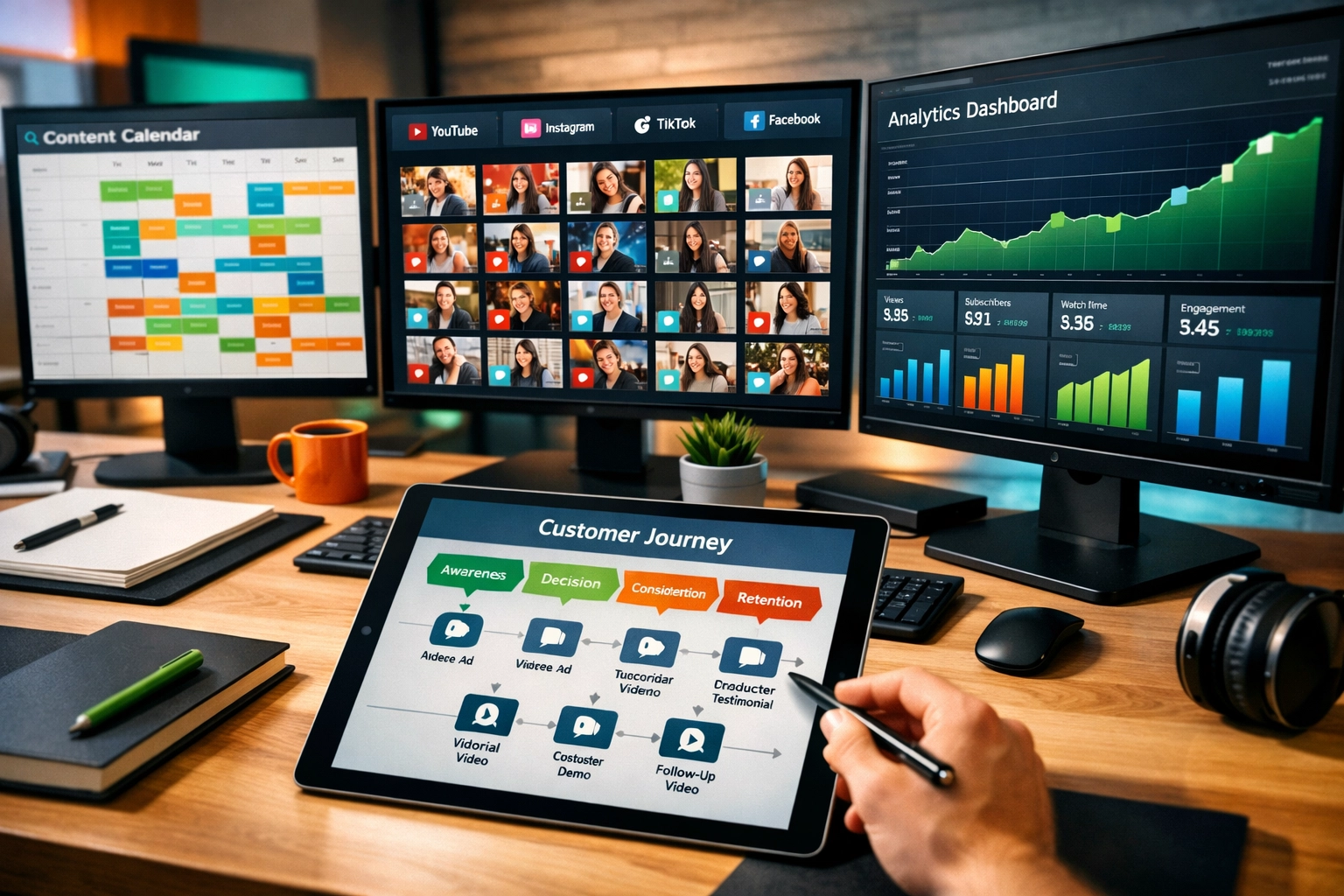
2. You Map Content to the Buyer's Journey
Different people need different videos at different stages. A cold prospect needs an awareness-stage video that speaks to their problem. A warm lead needs proof: case studies, testimonials, ROI breakdowns. A customer needs onboarding or upsell content. Strategy ensures you're not pitching when you should be educating.
3. You Design for Distribution
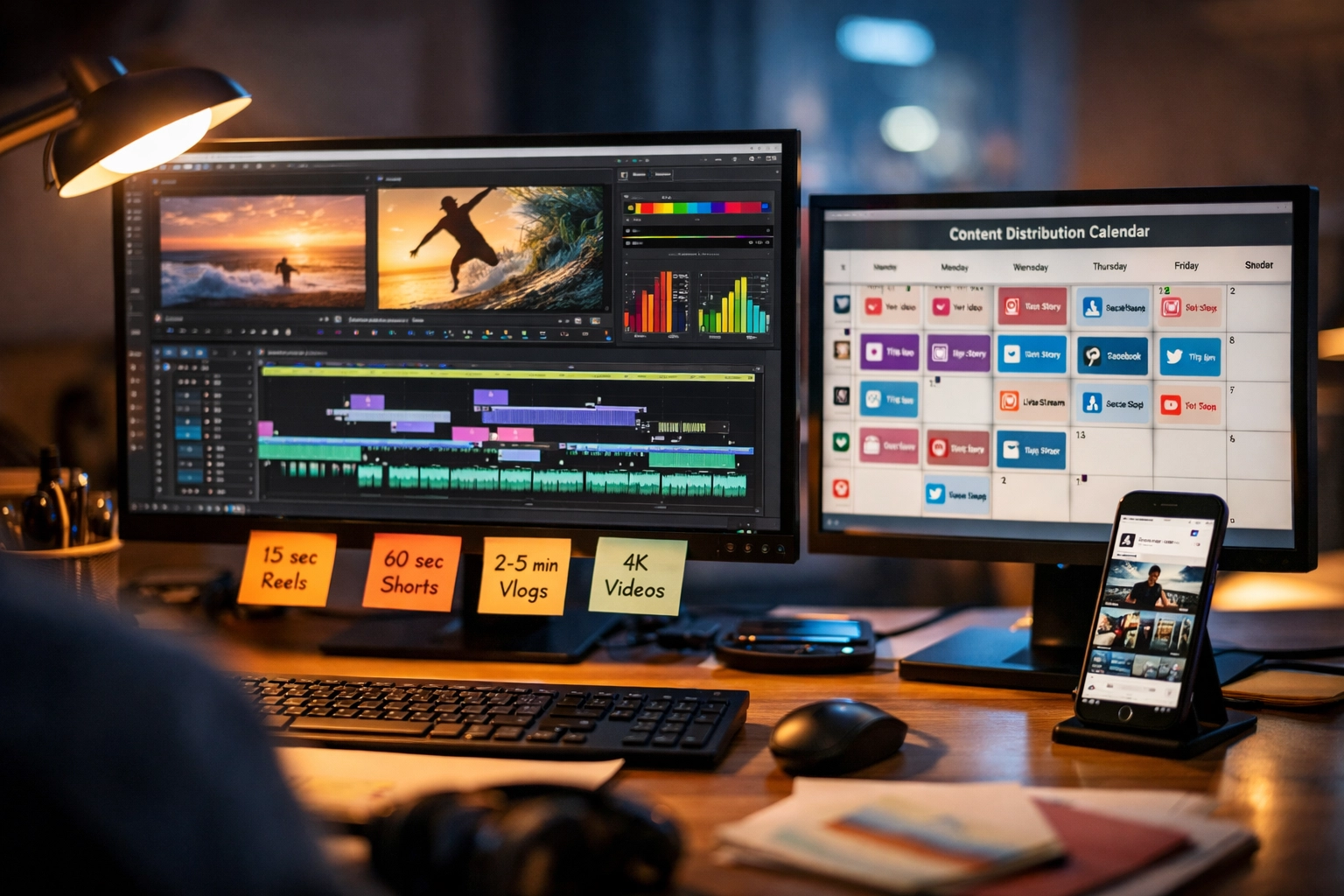
You're not making "a video." You're making a core asset that can be adapted into multiple formats: a 90-second cut for LinkedIn, a 15-second teaser for Instagram, a 5-minute version for your website, and pull-quote graphics for email campaigns. One shoot, 12 months of content.
4. You Build Measurement Into the Plan
You don't wait until after the video is live to figure out how you'll track performance. You set KPIs up front: click-through rates, form fills, time-on-page, conversion lift: and you integrate tracking mechanisms into the distribution plan.
5. You Iterate Based on Data
The first version of the video is just the hypothesis. Strategy includes testing, learning, and optimizing. Maybe the hook needs to be punchier. Maybe the CTA needs to come earlier. Maybe the audience segment you thought would respond actually doesn't. Strategy allows you to adapt without starting from scratch.
The Bottom Line: Which One Grows Your Organization?
The answer is obvious, but let's say it clearly: strategy is what drives growth. Production is the tool. Strategy is the plan that makes the tool effective.
You can have gorgeous, cinematic video and still see zero ROI if it's not strategically deployed. You can have modest, straightforward production and generate massive returns if it's built on a smart strategy.
The organizations that win with video aren't the ones with the biggest budgets or the flashiest content. They're the ones that start with strategy and let production serve the plan.
If you've been investing in video and not seeing results, it's not because video doesn't work. It's because you've been paying for production without the strategic foundation that turns content into growth.
Final Thoughts
Video is one of the most powerful tools you have to grow your organization: but only if you use it strategically. That means defining your goals, mapping content to your audience's needs, designing for distribution across multiple channels, and measuring what actually matters.
If you're ready to stop guessing and start growing, let's talk strategy first. We help businesses and purpose-driven organizations build video systems that actually drive results: not just create content.
Answer a few quick questions here and let's figure out what a strategy-first approach looks like for you.