
Strategy, creative thinking, industry perspective, and lessons from the work.
Work With Us ↗You already know your prospective customers are tired of ads. They scroll past them. They skip them. They've built mental filters that automatically dismiss anything that looks like paid promotion.
But a real customer, looking directly into the camera, sharing their actual experience with your product or service? That's different. That breaks through. And the data proves it: testimonial videos convert at rates that make traditional advertising look like a relic from another era.
Here's why testimonial video production has become the most powerful tool in your marketing arsenal, and how to execute it right.
The Trust Gap That Ads Can't Cross
Nine out of ten people trust what a customer says more than what your brand says about itself. That's the fundamental problem with traditional ads. No matter how clever your copy or how polished your production, your audience knows you're trying to sell them something.
Testimonial videos sidestep this entirely. When a real person shares their genuine experience, they're offering social proof: tangible evidence that your business delivers on its promises. And that authenticity is priceless.
Better yet, 88% of customers trust video testimonials as much as personal recommendations from people they know. Think about that. A two-minute corporate video production featuring one of your satisfied clients can carry the same weight as a friend's endorsement over coffee.
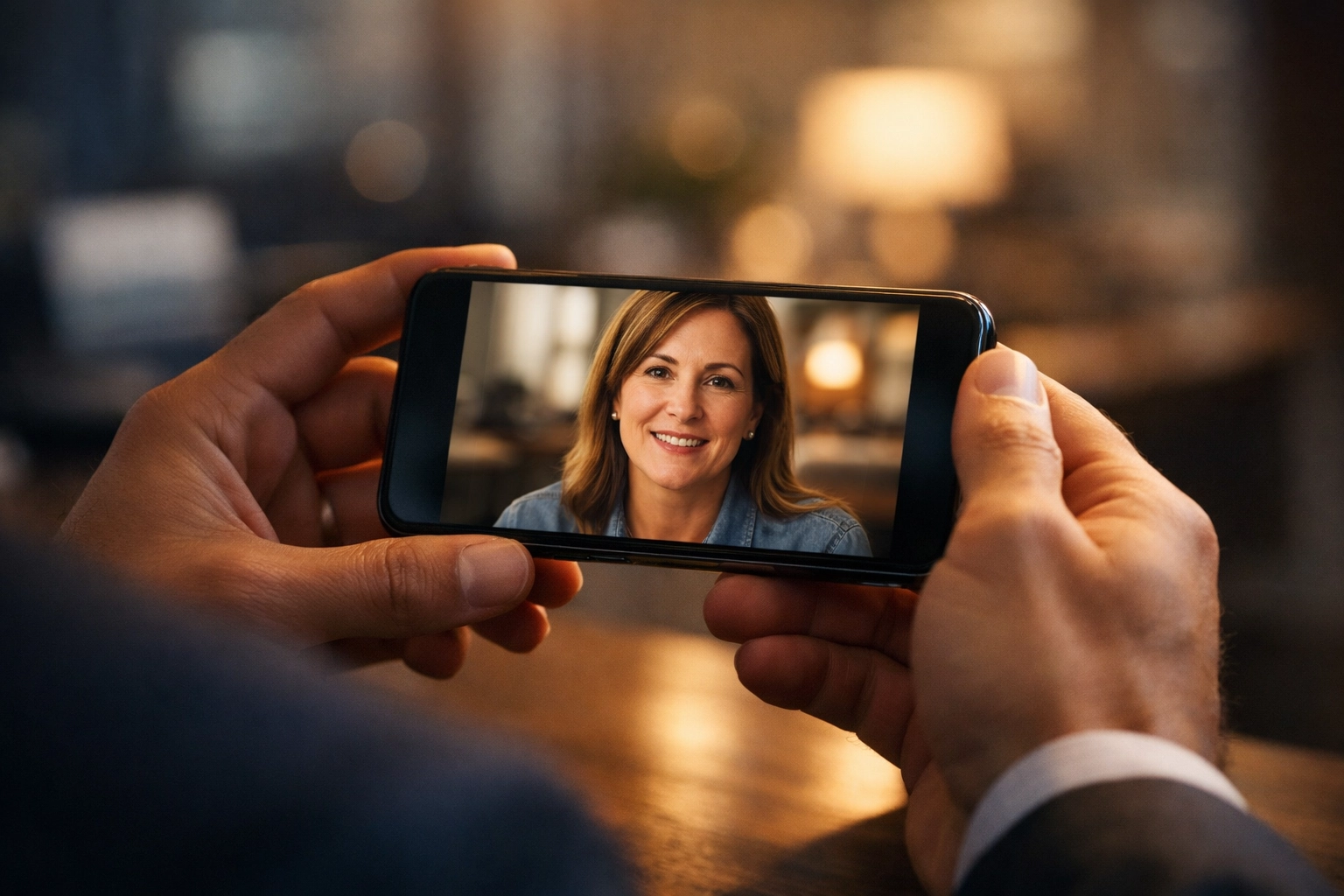
This isn't just about likability. It's about credibility. Written testimonials can be faked. Stock photos look staged. But video captures real emotions, real body language, and real conviction in a way that's nearly impossible to manufacture.
The Retention Advantage
Here's where things get even more interesting. People retain 95% of a video message but only 10% of written text. That's not a small difference: it's a complete restructuring of how your message lands and sticks.
When a customer speaks on camera about how your service solved their problem, viewers don't just hear the words. They see the relief in their face. They hear the enthusiasm in their voice. They connect with the story emotionally, and that emotional connection creates memory.
Approximately 80% of visual information is retained compared to only 20% of text-based information. So when you're deciding where to invest your marketing resources, you're choosing between a format that people will mostly forget and one that will stay with them for weeks.
The Conversion Numbers Don't Lie
The performance gap between testimonial videos and traditional advertising isn't subtle. Video testimonials can increase conversion rates by 80%. Some businesses see a 34% conversion lift by simply adding customer videos to their landing pages.
And here's the really striking part: 79% of consumers are more likely to buy a product after watching a video testimonial. Compare that to written testimonials, which convert at significantly lower rates, and you start to understand why smart businesses are shifting their entire content strategy around video.

It's not just about landing pages either. Including video testimonials in customer emails increases click-through rates by 300%. Visual content with testimonials has a 40 times higher chance of being shared on social media than links and text combined.
You're not just getting better conversion on one channel. You're creating an asset that performs across your entire marketing ecosystem.
Why This Matters More Than Ever in 2026
Ad fatigue isn't new, but it's worse now than it's ever been. Your audience has spent years being bombarded with sponsored posts, pre-roll ads, and branded content. They've developed sophisticated filters for tuning it all out.
Testimonial videos break through because they don't feel like marketing. They feel like conversation. They feel like discovery. When your prospect watches a customer talk about their results, they're not being sold to: they're listening to someone like them share their experience.
That's a fundamentally different psychological position, and it's why testimonial video production has become non-negotiable for businesses serious about growth.
How to Integrate Testimonial Videos Into Your Website + Funnel
Most businesses treat a testimonial like a “nice-to-have” video—and then bury it on a random page or post it once on social. That’s why it doesn’t move the needle.
You don’t need a massive budget. You need intentional placement. Because a testimonial isn’t just content—it’s a trust-building asset that belongs inside your web design and sales funnel, on pages that are built to rank and convert.
Here’s how to do it right.
1. Keep It Short and Focused
Videos under two minutes perform best. They maintain viewer attention, deliver the message clearly, and are more likely to be watched to completion.
That means you can't let your customer ramble. You need to guide the conversation toward specific outcomes and concrete details. The goal isn't a five-minute documentary: it's a focused story that demonstrates value quickly.

2. Structure Around Problem and Solution
The most effective testimonials follow a simple narrative:
- What problem or challenge was the customer facing?
- Why did they choose your business?
- What specific results did they experience?
- How has their situation improved?
This structure works because it mirrors your prospect's thought process. They're not just hearing "this company is great": they're seeing themselves in the customer's original problem and imagining the same solution working for them.
3. Prioritize Authenticity Over Polish
Your testimonial video doesn't need cinematic lighting or a Hollywood-level script. In fact, videos that look too polished can actually hurt credibility. They start to feel like ads again.
What you need is real people speaking naturally about their genuine experiences. Capture their body language. Let them speak in their own words. Include the pauses, the smiles, the moments where they search for the right phrase. That's where authenticity lives.
Better yet, avoid stock photo aesthetics entirely. Film in real locations. Use natural light when appropriate. Show your customers in their actual work environment, not against a generic backdrop.
4. Get Specific With Results
Vague praise doesn't convert. "They were great to work with" is nice, but it doesn't give your prospect anything concrete to evaluate.
Instead, guide your customer toward specific details:
- What exact problem did you solve?
- How did our approach differ from others?
- What measurable improvement did you see?
- What surprised you about working with us?
The more specific the testimonial, the more credible it becomes. Details prove the story is real.
5. Place Testimonials Where Decisions Get Made (Not Where It's Convenient)
It’s tempting to publish your testimonial and call it a day. But the magic happens when you design the page around the trust—not the other way around.
Start by mapping your funnel. Ask yourself:
- Where do people first “get” what you do?
- Where do they hesitate?
- Where do they compare options?
- Where do they finally reach out?
Then place the testimonial video on the pages that answer those moments:
- SEO landing pages targeting a specific service + location/industry (“what you do” + “who it’s for” + “why trust you”)
- Service pages where prospects are evaluating outcomes and fit
- Homepage sections that establish credibility fast (above the fold if trust is your main barrier)
- Case study / results pages where proof matters more than promises
- Contact / Work With Us pages to reduce friction right before conversion
Done right, your testimonial becomes the page’s proof engine—not a decorative add-on.
6. Build SEO-Optimized Landing Pages Around the Testimonial
If your testimonial video lives on a page nobody finds, it can’t convert. That’s why your web design and SEO have to work with the story you’re telling.
You can tighten the whole system by pairing the video with on-page SEO fundamentals:
- One clear page goal (book a call, request info, donate, apply, etc.)
- A matching headline + H2s that reflect how people actually search
- A short transcript or pull quotes to add indexable, trust-heavy copy
- Fast load times and clean layout so the video doesn’t slow the page down
- A strong CTA near the video (and again after it), so the momentum has somewhere to go
And no, this doesn’t mean stuffing keywords everywhere. It means aligning the story with the search intent—so the right people land on the right page and feel confident taking the next step.
7. Use Testimonials to Support the Entire Sales Sequence
Once the landing page is doing its job, your testimonial can keep doing the heavy lifting after the click.
Use the same asset strategically in the follow-up:
- Embed it in lead nurture emails right after the first inquiry
- Include it in proposal pages or “what to expect” follow-ups
- Add short clips to retargeting so prospects see proof, not more hype
- Repurpose quotes into supporting graphics that match your brand and reinforce the story
This is what we mean at South Town Productions by Strategy First—your cinematic storytelling, web experience, SEO, and supporting design all working together like one system.
The Implementation Reality
You don't need a massive budget or a complex production process to create effective testimonial videos. You need a strategy, a decent camera, and willing customers who believe in what you do.
Most businesses already have happy clients: they just haven't asked them to share their experience on camera. That's the first step. Reach out to customers who've gotten real results and invite them to be part of your story.
From there, it's about execution. Know what questions to ask. Capture genuine emotion. Edit for clarity and impact. And deploy the final video where it can do the most good.
Final Thoughts
Testimonial videos outperform ads because they leverage something advertising can’t manufacture: authentic social proof from real people sharing real experiences. In 2026, that authenticity is the most valuable currency in marketing.
If you’re ready to turn testimonials into a Strategy First growth asset—video + SEO landing pages + conversion-focused web design—let’s talk about your goals. We’ll help you capture the right stories and place them where they build trust, rank in search, and move people to action.
Your satisfied customers are your best marketers. Let’s put their stories where your funnel needs them most.