Strategy, creative thinking, industry perspective, and lessons from the work.
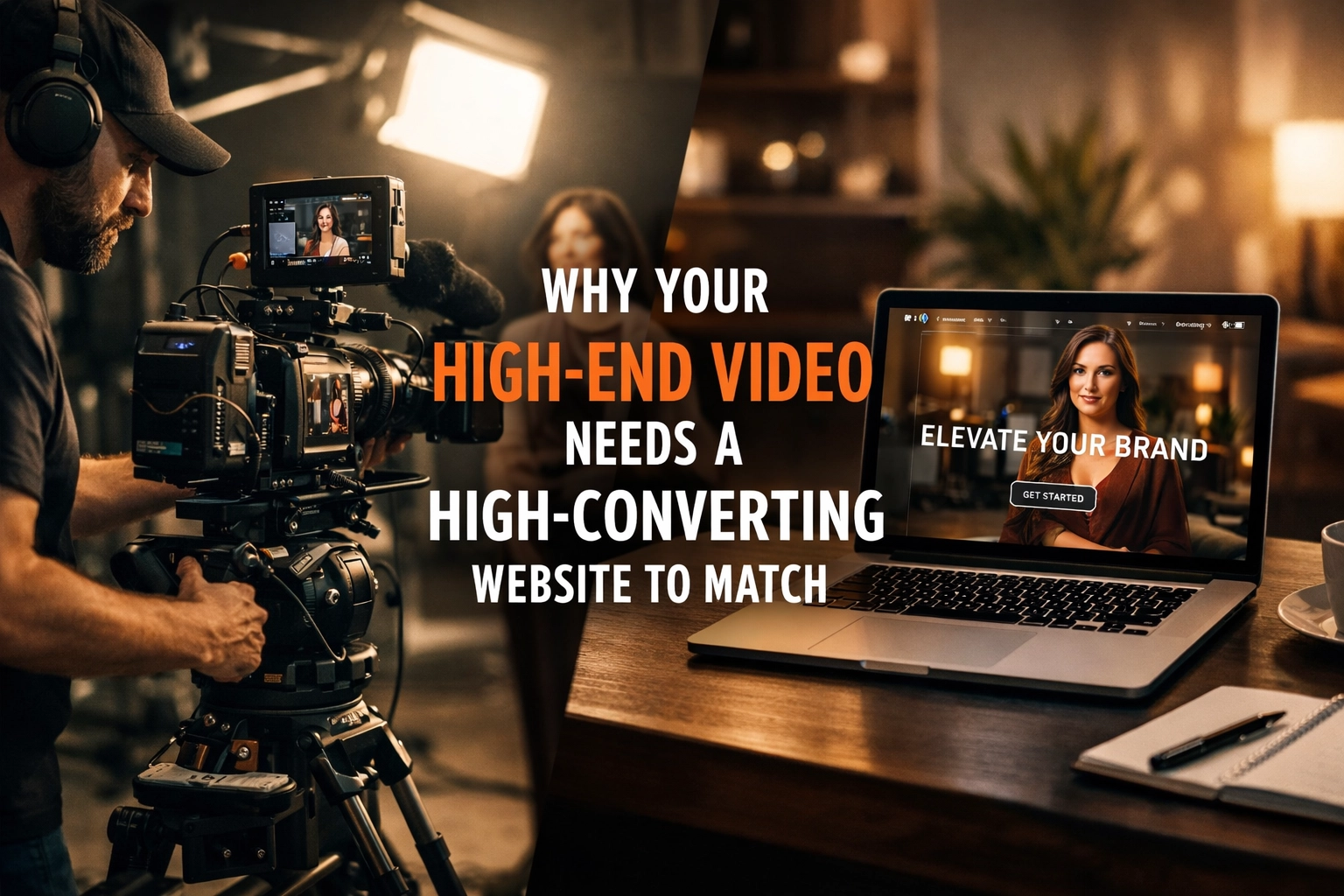
Work With Us ↗You already know video works. You've seen the engagement numbers, watched your audience lean in during a well-crafted story, and felt the emotional pull of cinematic visuals done right.
But here's what most organizations miss: a stunning video without a high-converting website is like building a beautiful storefront with no cashier inside. People show up, they're impressed, they're ready to act: and then they hit a landing page that can't close the deal.
Your video drives attention. Your website captures it and turns it into results.
Here's how to make sure they work together.
The Gap Between Engagement and Conversion
Videos on landing pages can boost conversions by up to 86%. That's not a typo. When done right, video is one of the most powerful tools you have for capturing attention and building trust.
But that stat comes with a caveat: the video needs somewhere to send people.
Think about it. You invest in high-end production: scripting, cinematography, editing that makes your story impossible to ignore. Viewers watch, they connect, they're ready to take the next step. And then what?
If your website isn't built to receive that momentum, you're losing them. A slow-loading page, unclear navigation, a weak call-to-action buried under generic copy: it doesn't matter how beautiful your video is. The conversion dies on the landing page.
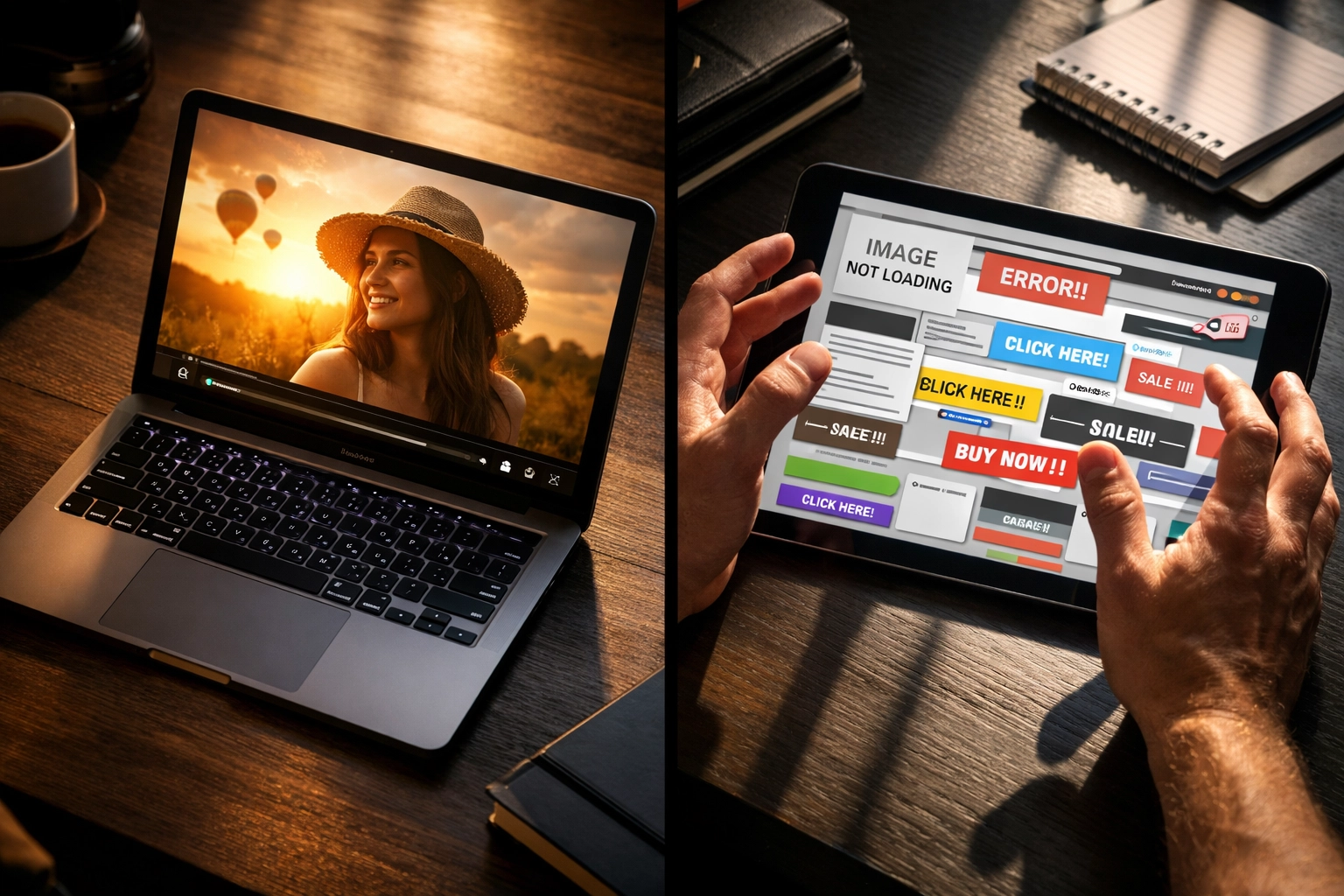
This is where most video projects fall short. The video team nails the creative. The website exists as an afterthought. And the gap between engagement and conversion becomes a black hole where your ROI disappears.
What a High-Converting Website Actually Does
A high-converting website isn't just pretty. It's strategically designed to complete the journey your video starts.
Here's what that looks like in practice:
- Fast load times so your video plays immediately without buffering or delays
- Clear hierarchy that guides viewers from the video to the next step without friction
- Optimized CTAs positioned exactly where engagement peaks
- Mobile-first design because most of your audience is watching on their phones
- SEO integration so the video doesn't just convert visitors: it attracts them in the first place
Your website and your video should be designed together, not bolted onto each other after the fact.
When we approach a project through our Strategy First model, we don't think of video as one deliverable and web design as another. We think of them as one integrated system. The video tells the story. The website turns that story into action.
Where Most Organizations Get It Wrong
It's tempting to treat video production and web design as separate line items. You hire a video team for the shoot, a web designer for the site, and hope it all works together in the end.
It doesn't.
Here's what happens instead:
The video lives in the wrong place. It's embedded on a homepage carousel where only 30% of visitors will see it, or buried on an "About" page with no strategic purpose.
The CTA doesn't match the video's message. Your video ends with an emotional appeal to get involved, but the website's call-to-action says "Learn More" and links to a generic contact form. The disconnect kills momentum.
The page isn't optimized for conversions. The video is hosted on a landing page with no supporting copy, no trust signals, no clear next step. Viewers finish watching and bounce because they don't know what to do next.

Every one of these problems comes from treating video and web as separate projects. When you design them together, these gaps disappear.
The Strategy First Approach: Video + Web + SEO
Here's how we think about it.
Your video is the emotional engine. It's what captures attention, builds trust, and tells your story in a way words alone never could. But video doesn't exist in a vacuum.
Your website is the conversion infrastructure. It's where viewers land after the video ends, where they decide whether to take action or move on. A high-converting website doesn't just host your video: it amplifies it.
And SEO? That's what makes sure people actually find the page in the first place.
When we design a website for video, we're thinking about:
- Page speed and technical performance so your cinematic work loads fast and plays smoothly
- Strategic placement that puts your video where it'll have the most impact
- Conversion-focused design with CTAs that match the video's message and make the next step obvious
- SEO optimization so your content ranks and attracts the right audience organically
- Mobile experience because that's where the majority of video views happen
This isn't just a video project or a web project. It's a growth system.
What This Looks Like in Practice
Let's say you're a nonprofit launching a fundraising campaign. You've produced a powerful two-minute video that tells the story of the community you serve. It's cinematic, emotional, impossible to ignore.
Now what?
Without an integrated approach, that video lives on your homepage. Maybe it auto-plays. Maybe it doesn't. Viewers watch it, feel something, and then… scroll past. There's no clear path from emotion to action.
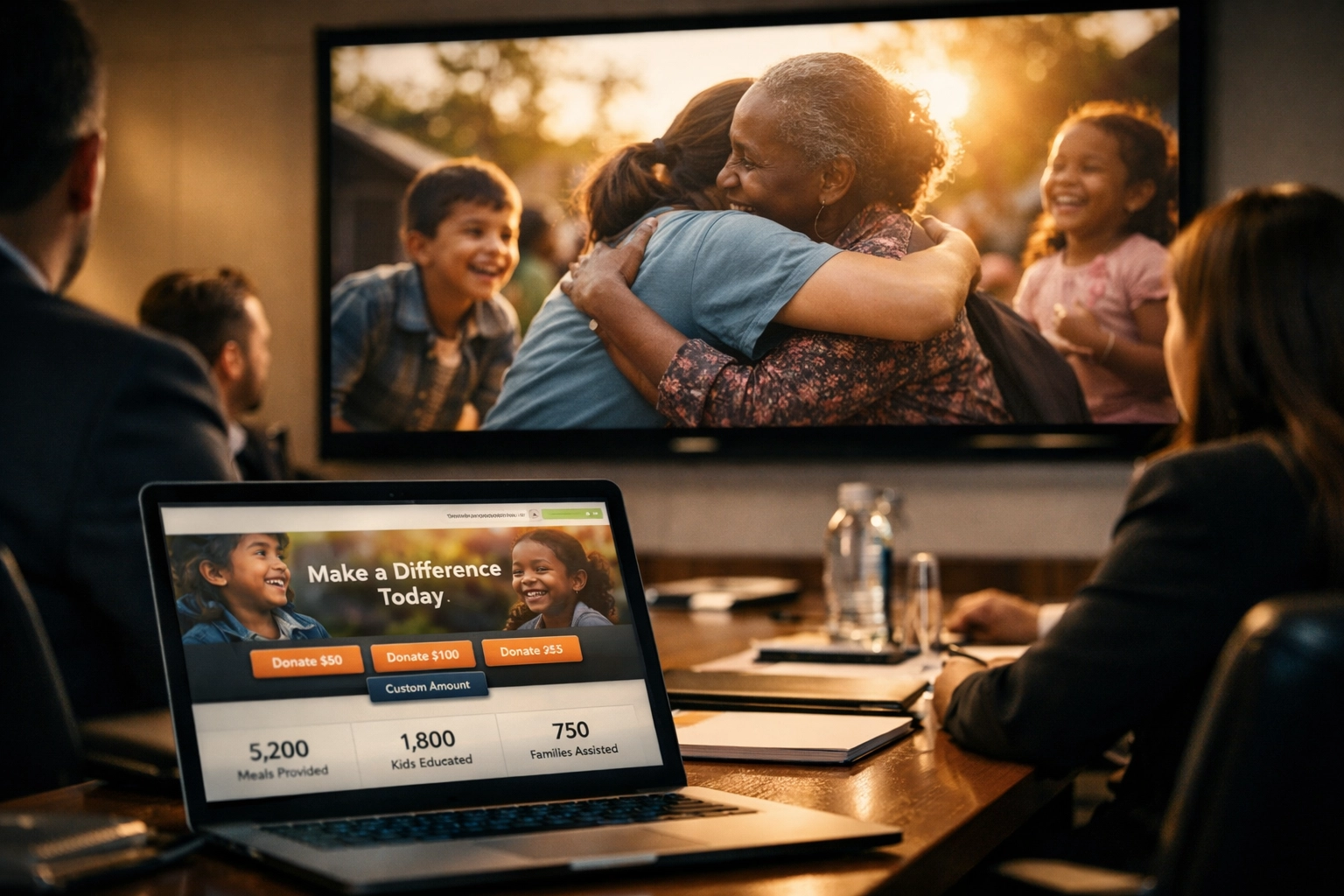
With a Strategy First approach, we build a dedicated landing page designed around that video. The page loads fast. The video is positioned above the fold with a clear headline that reinforces the message. When the video ends, the CTA is immediate: "Help us reach our goal: donate today."
Below the video, we add supporting copy that deepens the story without repeating it. Trust signals: impact stats, testimonials, a simple donation form. And the entire page is optimized for SEO, so when someone searches for your cause, this page is what they find.
The video drives emotion. The website converts it into action. SEO makes sure people see it.
That's the difference between a video project and a growth strategy.
Why This Matters for Purpose-Driven Organizations
If you're working in the nonprofit space or building a purpose-driven brand, you don't have room for wasted effort. Every dollar you spend on production, every hour you invest in strategy: it has to work.
A high-end video without a high-converting website doesn't just underperform. It actively wastes the momentum you've built.
Your audience is ready to act. They want to support your mission, donate to your cause, partner with your organization. But they need a clear, frictionless path to do it.
When your video and website are designed together, that path becomes obvious. The story pulls them in. The website moves them forward. And the integrated approach ensures nothing falls through the cracks.
Final Thoughts
Cinematic storytelling is powerful. But it's only as effective as the system you build around it.
Your high-end video deserves a high-converting website to match: one that's designed specifically to maximize impact, guide viewers toward action, and drive real results for your organization.
At South Town Productions, we don't just create videos. We build integrated strategies that combine cinematic storytelling with web design, SEO, and conversion optimization. If you're ready to turn engagement into growth, let's talk.
Your story deserves to be seen. And more importantly, it deserves to work.