Strategy, creative thinking, industry perspective, and lessons from the work.
Work With Us ↗You've spent weeks designing the perfect website. The visuals are stunning. The copy is sharp. Your brand feels cohesive across every page.
And then... crickets.
No traffic. No inquiries. No one's finding you unless they already know your name and type it directly into Google.
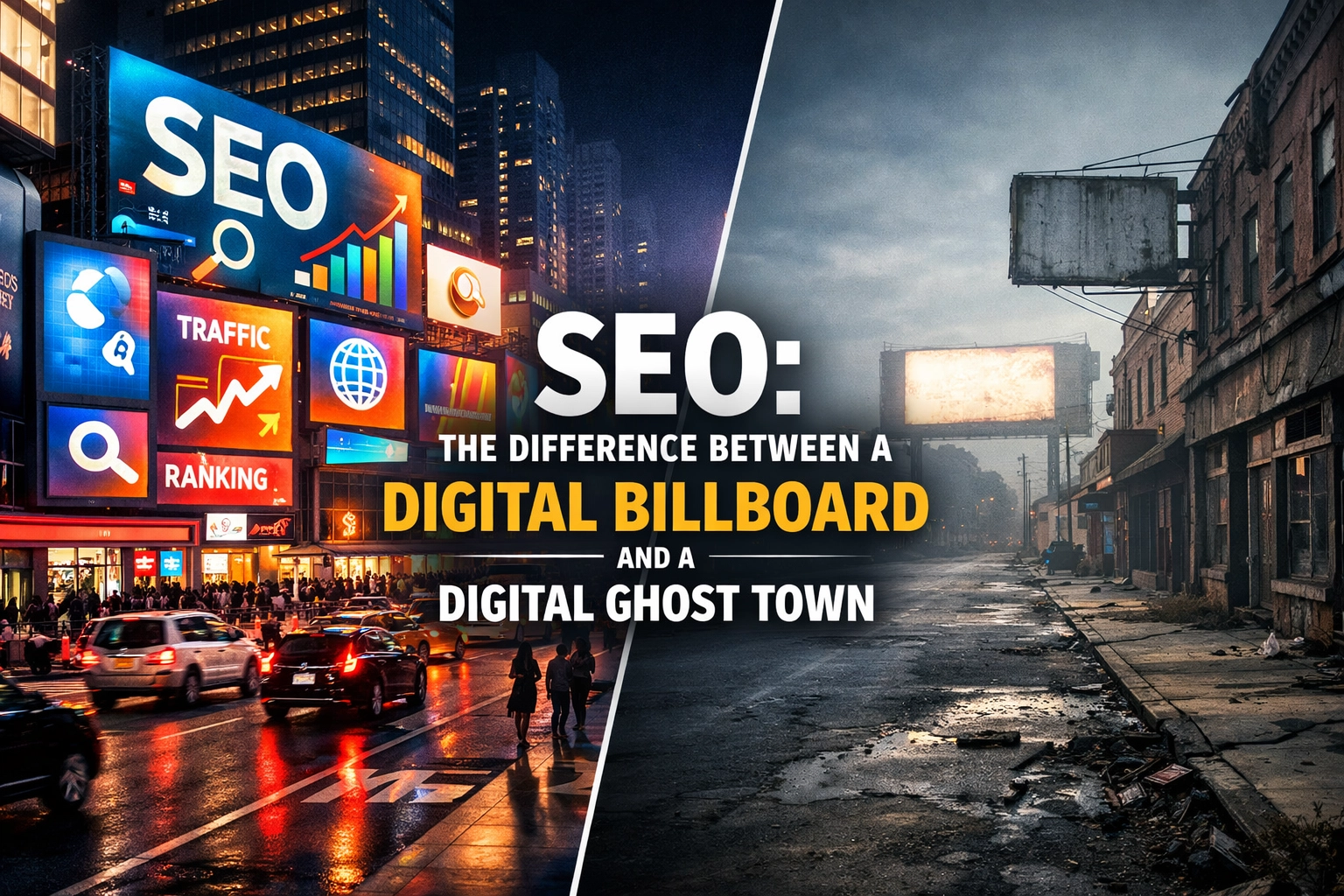
Here's the hard truth: a beautiful website without SEO is a digital ghost town. It exists, but no one's walking through the door. You're paying for real estate in the middle of nowhere while your competitors occupy prime locations on the search engine map.
At South Town Productions, we build websites that function like digital billboards, strategically placed, impossible to miss, and designed to pull your ideal audience directly to you. Here's how.
The Digital Billboard vs. Digital Ghost Town Analogy
Think about a physical billboard on a busy highway. It's positioned where thousands of people will see it every day. The message is clear. The design catches attention. It drives action.
Now imagine that same billboard hidden behind a forest in an area with no roads. Beautiful design. Zero visibility.
That's what happens when you build a website without SEO baked into the foundation.

A digital billboard is built with discoverability in mind. It uses:
- Strategic keyword placement that matches what your audience is actually searching for
- Technical infrastructure that search engines can crawl and index efficiently
- Content architecture that guides both users and algorithms to what matters most
A digital ghost town looks great in screenshots but fails at the fundamentals:
- No keyword research informing the copy
- Slow load times that tank rankings
- Broken site structure that confuses search engines
- Missing metadata, alt text, and schema markup
You already know looks matter. But if the technical foundation isn't there, your site will never rank: and all that design work goes to waste.
Why SEO Can't Be an Afterthought
Most businesses approach web design and SEO as separate projects. They build the site first, then try to "add SEO" later like it's a coat of paint.
It doesn't work that way.
SEO needs to be built into the DNA of your website from day one. Here's why:
Your site structure determines how search engines understand and rank your content. If the architecture isn't logical, no amount of keyword stuffing will fix it. When we design a site, we start by mapping out:
- How pages link to each other
- Which content deserves priority in the hierarchy
- How users (and crawlers) will navigate from entry point to conversion
Your page speed affects your ranking. Google has made it clear: slow sites get penalized. If your developer builds a visually heavy site without optimizing images, compressing code, or caching resources, you're starting in a hole.
Your content needs to answer real search queries. Before we write a single headline, we research what your audience is typing into Google. What questions are they asking? What problems are they trying to solve? Then we build pages that directly address those queries: using language that matches their search intent.
Your technical setup determines indexability. If search engines can't properly crawl your site because of broken redirects, missing sitemaps, or duplicate content issues, you're invisible. Period.
What "Built for SEO" Actually Means
When we say our web development services are "built for SEO," we're talking about a ground-up approach that integrates technical optimization at every level.
Here's what that looks like in practice:
1. Keyword Research Before Design
We start every web project with keyword research: not as a checkbox, but as the strategic foundation. We identify:
- High-value search terms your ideal clients are using
- Long-tail keywords that indicate buyer intent
- Content gaps your competitors aren't filling
Then we map those keywords to specific pages and sections of your site. Your homepage, service pages, blog posts: they all target strategic search terms that align with your business goals.
2. Technical Infrastructure That Performs
A search-optimized site needs clean code, fast load times, and mobile responsiveness. We build with:
- Optimized image formats (WebP, compressed files, lazy loading)
- Minified CSS and JavaScript to reduce file size
- Responsive design that adapts seamlessly to any device
- Structured data markup (schema) that helps search engines understand your content
- XML sitemaps and robots.txt files that guide crawlers efficiently
These aren't nice-to-haves. They're the difference between ranking and disappearing.

3. Content Architecture for Humans and Algorithms
Good SEO serves both your users and search engines. We create:
- Clear URL structures that reflect content hierarchy (example.com/services/video-production, not example.com/page123)
- Internal linking strategies that guide users deeper into your site while distributing page authority
- Header tags (H1, H2, H3) that organize content logically and signal topic relevance
- Meta titles and descriptions that drive clicks from search results
Every element has a purpose. Nothing is arbitrary.
4. Metadata and Alt Text
Search engines can't "see" images or watch videos: they rely on text to understand what's on your page. We ensure:
- Every image has descriptive alt text that includes relevant keywords
- Video embeds include optimized titles, descriptions, and transcripts
- Meta descriptions entice clicks while signaling content relevance
It's the behind-the-scenes work that makes your site discoverable.
How SEO Integrates with Video and Strategy
Here's where our integrated model really shines.
You know we produce cinematic video content. You might also know we design websites. But the magic happens when video, web design, and SEO work together as one cohesive strategy.
Let's say you're a nonprofit launching a campaign. We don't just shoot a killer testimonial video and call it done. We:
- Build a landing page optimized for the campaign's target keywords
- Embed the video with schema markup so it appears in video search results
- Create blog content around the campaign theme to capture organic traffic
- Design graphics and social assets that drive people back to the optimized landing page
Every piece reinforces the others. The video tells your story. The website converts visitors. The SEO ensures people find you in the first place.
Without that integration, you're running three separate campaigns that never quite connect. With it, you're building momentum that compounds over time.

The Long Game: SEO is a Growth Engine
One more thing to understand: SEO isn't a one-and-done project. It's a long-term growth engine.
The site we build for you today will continue attracting new visitors months and years down the line: if it's built right. Google rewards sites that:
- Publish fresh, relevant content regularly
- Maintain fast load speeds and strong user experience
- Earn backlinks from credible sources
- Stay technically sound as algorithms evolve
That's why our Strategy First approach doesn't stop at launch. We monitor performance, refine keyword strategies, and update technical elements as needed to keep your site competitive.
It's not flashy. But it's what separates businesses that grow from businesses that plateau.
Final Thoughts
Your website should be a digital billboard, not a digital ghost town. That means building for discoverability from the ground up: keyword research, technical optimization, content strategy, and ongoing performance tracking.
At South Town Productions, we don't separate web design from SEO. We build them together as part of an integrated strategy that includes video, branding, and digital marketing. Because when your story is told cinematically and strategically, you don't just look good: you get found.
Ready to turn your website into a digital billboard?Let's build something that actually drives growth.